Autonomous Aerial Power-Plant Inspection in GPS-Denied Environments
Published:
UAV trajectory generation and edge computer vision for inspecting energy infrastructure where GPS is unreliable. Funded by the US DOE / NETL.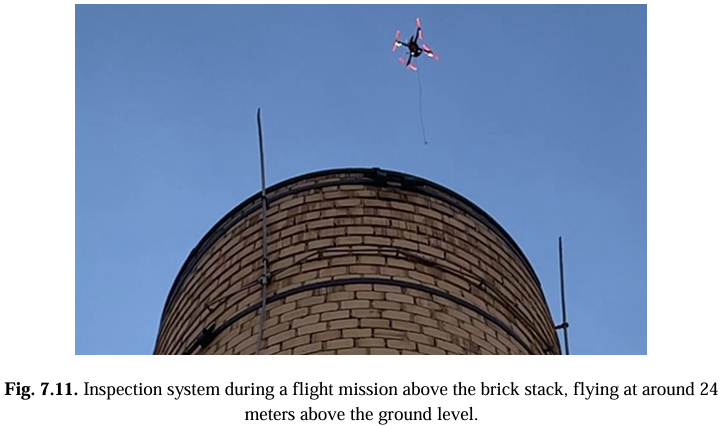

Published:
UAV trajectory generation and edge computer vision for inspecting energy infrastructure where GPS is unreliable. Funded by the US DOE / NETL.
Published:
Deep-learning crack detection running on-board UAVs for real-time infrastructure inspection.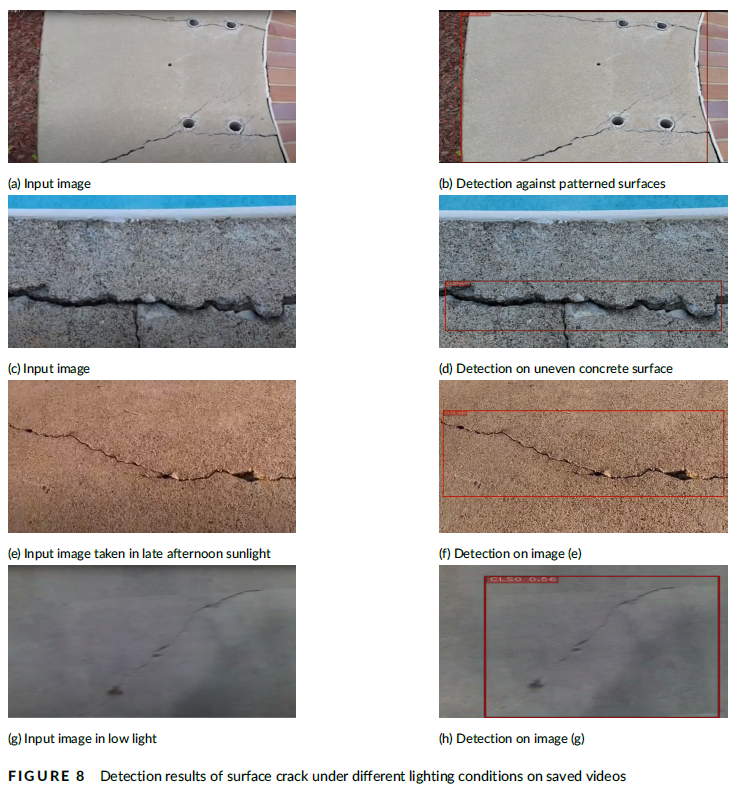
Published:
Using deep generative models to understand and visualise how disease progresses in brain imaging. Presented at IEEE BIBM 2024.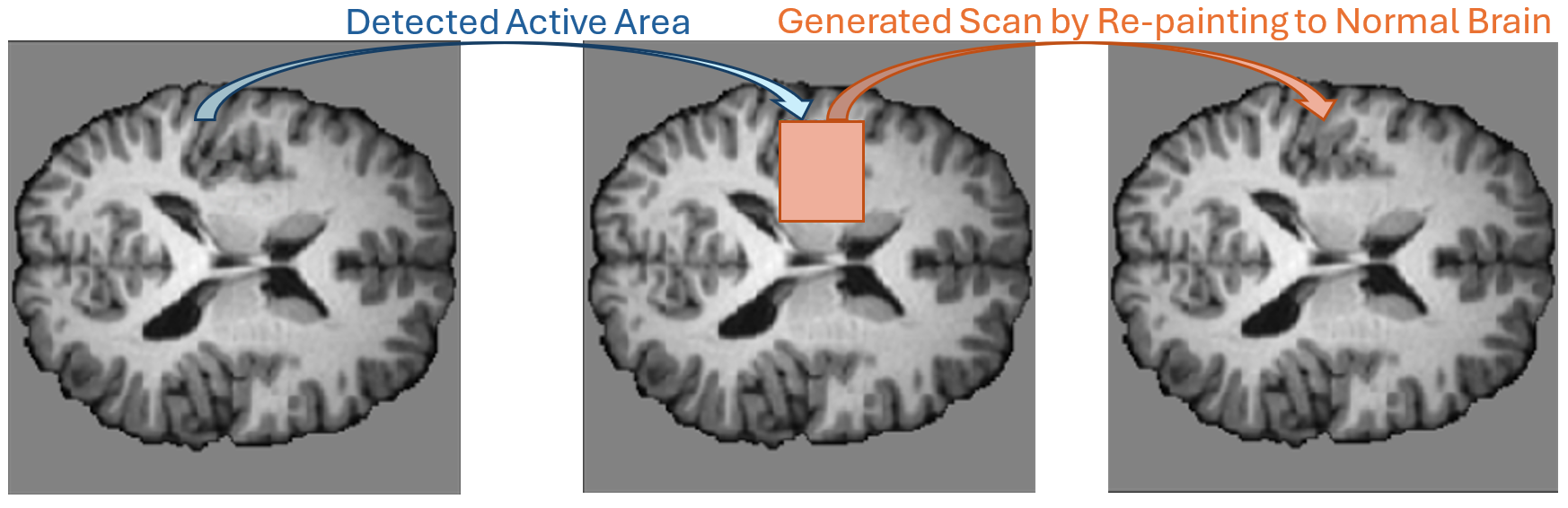
Published:
Multimodal machine learning with explainable AI (XAI) for earlier, clinically interpretable detection of eye disease — co-designed with clinicians for low-data settings. (Paper and patent in progress).
Published in AIAA SciTech 2020 Forum, 2020
A trajectory-generation method for autonomous power-plant inspection drones operating without GPS, presented at AIAA SciTech 2020.
Recommended citation: Rizia, M. M., Reyes-Munoz, J. A., Ortega, A. G., Choudhuri, A., & Flores-Abad, A. (2020). "A CAM/AM-based Trajectory Generation Method for Aerial Power Plant Inspection in GPS-denied Environments." AIAA SciTech 2020 Forum. https://arc.aiaa.org/doi/abs/10.2514/6.2020-0858
Published in IEEE International Conference on Bioinformatics and Biomedicine (BIBM) 2024, 2024
Deep generative models that re-paint abnormal brain MRI to normal-appearing scans — so realistic that expert radiologists distinguished them from real scans only 51.67% of the time.
Recommended citation: Rizia, M. M., Xu, C., Roberts, J., Barrett, L., Karunasena, S., Edelstein, S., & Suominen, H. (2024). "Understanding the Development of Disease in Radiology Scans of the Brain through Deep Generative Modelling." 2024 IEEE International Conference on Bioinformatics and Biomedicine (BIBM). https://ieeexplore.ieee.org/document/10822442/
Published in MedInfo 2025 — Studies in Health Technology and Informatics (IOS Press), 2025
A machine-learning evaluation study identifying non-invasive, blood-based markers of multiple sclerosis to support earlier, less-invasive detection.
Recommended citation: Vlieger, R., Rizia, M. M., Amjadipour, A., Cherbuin, N., Brüstle, A., & Suominen, H. (2025). "Disentangling Blood-Based Markers of Multiple Sclerosis Through Machine Learning: An Evaluation Study." MedInfo 2025, Studies in Health Technology and Informatics (IOS Press). https://www.medrxiv.org/content/10.1101/2025.04.02.25325148v1
Published in , 2026
title: “Autonomous aerial system for intelligent close-quarter inspection” collection: publications permalink: /publication/2026-aerial-close-quarter-inspection excerpt: ‘A low-cost autonomous UAV that navigates GPS-denied industrial structures using visual-inertial odometry and detects cracks and corrosion onboard (98.44% / 72.33% mAP@50). Open access.’ date: 2026-05-05 venue: ‘International Journal of Intelligent Robotics and Applications’ paperurl: ‘https://link.springer.com/article/10.1007/s41315-026-00537-8’ citation: ‘Reyes-Munoz, J. A., Ortega, A. G., Rizia, M. M., Choudhuri, A., & Flores-Abad, A. (2026). "Autonomous aerial system for intelligent close-quarter inspection." International Journal of Intelligent Robotics and Applications.’ —
Published:
This is a description of your talk, which is a markdown files that can be all markdown-ified like any other post. Yay markdown!
Published:
This is a description of your conference proceedings talk, note the different field in type. You can put anything in this field.
Undergraduate course, University 1, Department, 2014
This is a description of a teaching experience. You can use markdown like any other post.
Workshop, University 1, Department, 2015
This is a description of a teaching experience. You can use markdown like any other post.