Autonomous Aerial Power-Plant Inspection in GPS-Denied Environments
Published:
Role: Graduate Research Associate, NASA MIRO Center for Space Exploration & Technology Research (cSETR / Aerospace Center), University of Texas at El Paso.
Funding: US Department of Energy — Office of Fossil Energy & Office of Clean Energy Systems (FE-22), via the National Energy Technology Laboratory (NETL), 2018–2022.
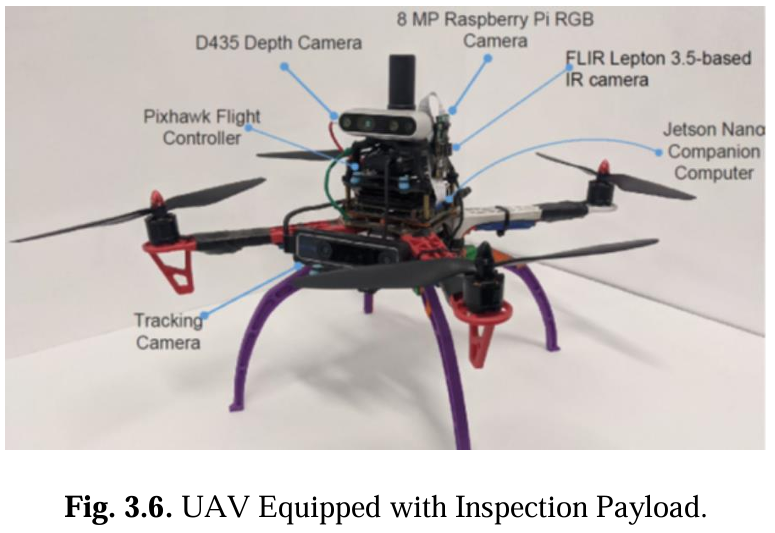
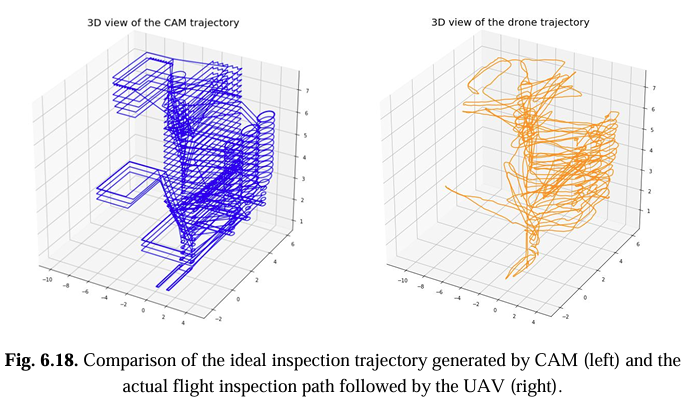
Power-plant and energy infrastructure are difficult to inspect with drones because GPS is often unreliable around large metal structures. This project developed an autonomous aerial inspection pipeline that generates safe, repeatable flight trajectories and detects structural features without depending on GPS. My contributions spanned a CAM/AM-based trajectory-generation method and onboard computer vision for feature detection at the edge.
Selected outputs
- Final DOE Technical Report: Autonomous Aerial Power Plant Inspection in GPS-denied Environments — OSTI 1905874
- Autonomous aerial flight path inspection using advanced manufacturing techniques, Robotica (2021) — featured on the journal cover — article
- A CAM/AM-based Trajectory Generation Method for Aerial Power Plant Inspection in GPS-denied Environments, AIAA SciTech 2020 — paper